Service Dogs for Veterans in West Virginia
This page explains the law in general terms. It is not legal advice. For a specific situation, contact the agency listed on this site or an attorney.
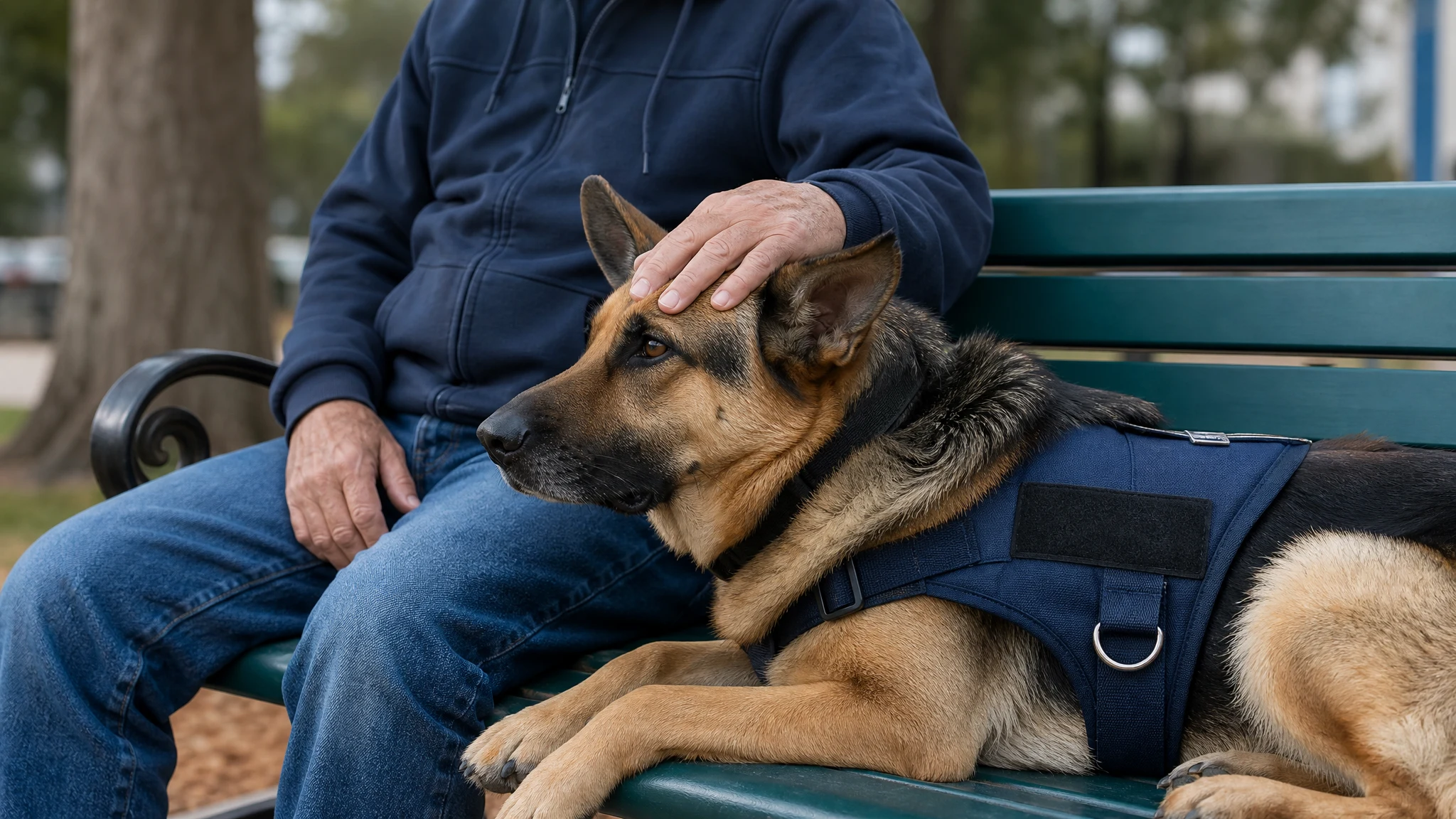
Many veterans ask whether a service dog could help with PTSD, mobility limits, hearing loss or other service-connected conditions. This guide explains how service dogs for veterans in West Virginia are obtained, what the law says, and how to apply to the programs that serve the state.
It is a practical walk-through, not legal or medical advice. Where details change by program, the guide tells you to check with the program directly.
What counts as a service dog for a veteran
ADA.gov defines a service animal as a dog that has been individually trained to do work or perform tasks for an individual with a disability. The key words are "work or tasks." The dog must be trained to do something that relates to the person's disability.
For a veteran with PTSD, that can include tasks such as interrupting repetitive behaviors, creating space in a crowd, or waking the handler from a nightmare. For a veteran with a mobility condition, tasks may include retrieving dropped items or helping with balance. Which tasks fit is a decision for you, your health care providers and the training program.
West Virginia's definition is slightly broader. West Virginia Code 5-15-3 covers any guide dog, signal dog or other animal individually trained to do work or perform tasks for a person with a disability. The ADA, by contrast, covers dogs only.
PTSD service dogs versus emotional support animals
This distinction matters, because the two are treated differently under the law.
- A PTSD service dog is trained to perform specific tasks that help with a disability. It is a service animal under the ADA.
- An emotional support animal provides comfort by being present. It is not trained for specific tasks, and it is not a service animal under the ADA.
- Therapy and comfort animals visit or comfort others. They are also not service animals under the ADA.
A calming presence is a real benefit, but it is not the same as task training. If you are looking for a PTSD service dog in West Virginia, ask every program what tasks its dogs are trained to perform and how those tasks are taught and tested.
Materials you will need
Gather these before you apply. Programs set their own requirements, so treat this as a starting list and confirm with each one.
- Your discharge paperwork, such as a DD-214, if you are applying to a veterans program.
- A list of the symptoms or limits you want help with, in your own words.
- Contact details for your doctor, counselor or other treating provider.
- A description of your home: who lives there, other pets, and whether you rent or own.
- A realistic picture of your daily routine, including work, travel and time away from home.
- Time and patience. Waitlists and training periods can be long, and the programs below have not published waitlist times in the sources used for this guide.
Step-by-step: how to get a service dog as a West Virginia veteran
Step 1: Be clear about why you want a dog
Write down the specific situations that are hard for you. Examples include crowded stores, sleep disruption, or difficulty with stairs. A service dog is a tool for specific needs, and programs usually want to hear what those needs are.
Be honest with yourself about the day-to-day commitment, too. A service dog needs daily feeding, exercise, grooming, veterinary care and ongoing training for its whole working life.
Step 2: Talk with your treating providers
Speak with a doctor, counselor or other provider you trust. They can help you decide whether a service dog fits your treatment plan, and many programs ask for provider information as part of an application.
If you receive care through the Department of Veterans Affairs, ask your VA care team how the VA handles service dogs for your condition, including any veterinary benefits or program referrals. The VA's policies are set by the VA and can change, so confirm the current rules with your care team or the VA directly rather than relying on a summary.
Step 3: Review the programs that serve West Virginia veterans
Several organizations place dogs with veterans in or near West Virginia. Read each one's own information, because eligibility and process vary.
- Hearts of Gold Service Dog Training Program (WVU), Morgantown. The program trains service dogs and gives them to veterans. A WDTV report on a new training cohort quotes a program trainer saying the dogs are free to veterans. Ask the program about its current application process and waitlist.
- Thin Line Service Dogs, Hedgesville. West Virginia Public Broadcasting reports that this nonprofit trains Golden Retrievers for first responders and disabled veterans, including veterans with PTSD or extreme stress. The article says dogs go to new owners at no charge because sponsors cover the cost. Confirm current availability and requirements with the organization.
- Canine Companions, Northeast Region. This national nonprofit lists West Virginia among the states its Northeast region serves. Its page says it places dogs with children, adults and veterans with disabilities, lists a veterans service dog program, and states there is no cost to clients. Check with Canine Companions for the application steps and timelines.
- paws4people Foundation. A 2014 Fairmont State University news page describes a paws4people service dog public access seminar with West Virginia Division of Corrections teams in the paws4prisons program. That is the only West Virginia activity documented here, and it is more than a decade old. Contact the foundation to find out whether it currently places dogs with West Virginia veterans.
This is not a complete list of every program, and no program should be treated as a promise of a dog. Ask each one about wait times, what it provides after placement, and what happens if a placement does not work out.
Step 4: Ask the right questions before you apply
Before committing to any program, ask:
- What tasks are your dogs trained to perform for PTSD or my specific condition?
- What training methods do you use? Look for humane, reward-based training, which is the approach supported by the American Veterinary Society of Animal Behavior (AVSAB).
- What does the dog cost, and what ongoing costs will I have for food, vet care and equipment?
- How long is the waitlist, and how often will I hear from you?
- What training do I receive as the handler?
- What follow-up support is offered after placement?
Be cautious about any seller that offers a quick dog, an online "registration" or a certificate in exchange for a fee. As explained below, none of that is required by law.
Step 5: Submit your application
Applications are made to each program directly through its own website or contact channels. Fill out every section, be specific, and keep copies of what you send. If a program asks for medical or military records, send what it asks for and ask how it will protect your information.
You can apply to more than one program. Tell each one if you are doing so, since that can affect how placements are planned.
Step 6: Prepare for the match and training period
Programs commonly include an interview, a home or lifestyle review, and a period of training with the dog before it goes home. Ask what to expect and how much time off or travel it involves.
While you wait, you can prepare your household. Talk with family or housemates about house rules, and think about where the dog will sleep, eat and rest.
Step 7: Learn your rights and responsibilities
Once you have a service dog, you will want to know how the law applies. The next section covers the basics, and our guide to service dog training and access rights in West Virginia goes further.
What the law says in West Virginia
No registry or certification is required
There is no official service dog registry under the ADA. West Virginia Code 5-15-4 states that service animals need not be licensed or certified by any state or local government, and that no specific signage or labeling is required. A vest or ID card is not legal proof of anything.
Public access
Under West Virginia Code 5-15-4, people with disabilities have full and equal access to public places, transportation, lodging, restaurants, professional offices, hospitals, other public accommodations, amusement venues and places of employment. They may bring a service animal without extra charge. The handler is liable for damage the animal causes, unless another person provoked the animal. The statute also says the animal may not take a seat on public conveyances and must be leashed on common carriers.
The two questions staff may ask
ADA.gov says that when it is not obvious what a dog does, staff may ask only two questions: whether the dog is a service animal required because of a disability, and what work or task the dog has been trained to perform. Staff should not ask for documentation or ask you to demonstrate the task.
Dogs in training
Section 5-15-4 extends access rights to certified service animal trainers while they are training. The exact conditions are in the statute text, so read West Virginia Code 5-15-4 directly if you plan to train a dog yourself, and check with the state agency below if you are unsure.
Housing and employment
The West Virginia Human Rights Act prohibits housing and employment discrimination, and it is enforced by the Human Rights Commission. The Commission lists a legislative rule on housing discrimination against persons with disabilities who use assistance animals, W. Va. Code R. sections 71-9-1 et seq. Read the rule or contact the Commission for the details. Federal housing and air travel rules come from HUD and the Department of Transportation, so check those agencies for your situation.
Misrepresenting a pet as a service animal
West Virginia Code 5-15-9 makes it a misdemeanor to falsely claim an animal is a service animal to obtain a right or privilege under 5-15-4. A first violation is punishable by a fine of up to $200, up to 10 days in jail, or both. A second or later violation carries a fine of up to $1,000, up to 30 days in jail, or both.
Where to file a complaint
If you believe you were denied access or housing because of your service dog, you can contact the West Virginia Human Rights Commission at 1 Players Club Dr., Suite 350, Charleston, WV 25311, phone 304-558-2616, email [email protected]. According to the Commission, complaints must be filed within 365 days, and it covers employment, housing and public accommodations.
Tips for a smoother process
- Keep a folder with your records, program correspondence and application dates.
- Follow up politely if you have not heard back, and ask where you are on the list.
- Practice calm, reward-based habits with any dog you live with now. Do not use shock, prong or choke collars, or dominance methods. They are not part of humane training.
- Bring a friend or family member to interviews if it helps you feel comfortable.
- Plan ahead for costs after placement, even if the dog itself is free. Food, veterinary care, grooming and replacement gear add up.
Common mistakes to avoid
- Paying for an online registration. It is not required and does not give legal protection.
- Assuming an emotional support animal has public access rights. Under the ADA, it does not.
- Applying to only one program and stopping there. Wait times are unknown, so consider more than one option.
- Skipping the questions about training methods. Ask how the dog was trained and what tasks it performs.
- Relying on a summary of VA rules. Confirm VA policy with the VA directly.
- Expecting the dog to replace care. A service dog is usually one part of a larger plan that may include counseling or medical treatment.
What results to expect
Experiences vary. Some veterans report that a service dog helps them feel more secure in public, sleep more steadily or take on more daily activities. Others find the adjustment demanding at first. Results depend on the person, the dog, the training and the support around them, and no program can promise a particular outcome.
A realistic timeline includes waiting, matching and training before the dog comes home, then months of building routines together. Be patient with yourself and the dog, and keep in touch with your providers and the program as you adjust.
Next steps
Start with the program pages linked above, and write down your questions before you call or apply. Then review the West Virginia access rights guide so you know your rights before the dog comes home.
Sources
- ADA.gov, Frequently Asked Questions about Service Animals and the ADA
- West Virginia Code 5-15-3, definitions
- West Virginia Code 5-15-4, equal right to use public facilities
- West Virginia Code 5-15-9, fraudulent representation; penalties
- WV Office of the Inspector General, Human Rights Commission
- WDTV, WVU Hearts of Gold introduces new service dog training cohort
- West Virginia Public Broadcasting, service dogs for first responders and veterans
- Canine Companions, Northeast Region
- Fairmont State University, paws4people public access training (2014)